Popular Products

Aronia Vida
€ 79.72
Xylitol or pentanpentol is also known as birch sugar. Originally, xylitol was obtained from the bark of birch trees. Today, there are other sources, such as cereal bran, straw, the remains of corn cobs or residues from sugar production. In nature, xylitol is also found in fruits, berries and vegetable plants.
Xylitol is similar in consistency to household sugar. It also has the same sweet taste. However, it is not a carbohydrate but a sugar alcohol, an intermediate product of carbohydrate metabolism in the body. This means that xylitol is found in the human body, especially in the liver, the main organ in the process of sugar metabolism.
Xylitol has been used for sugar-free foods, such as sugar-free chewing gum and sweets, for some time. It is now used as a sugar substitute in many households.
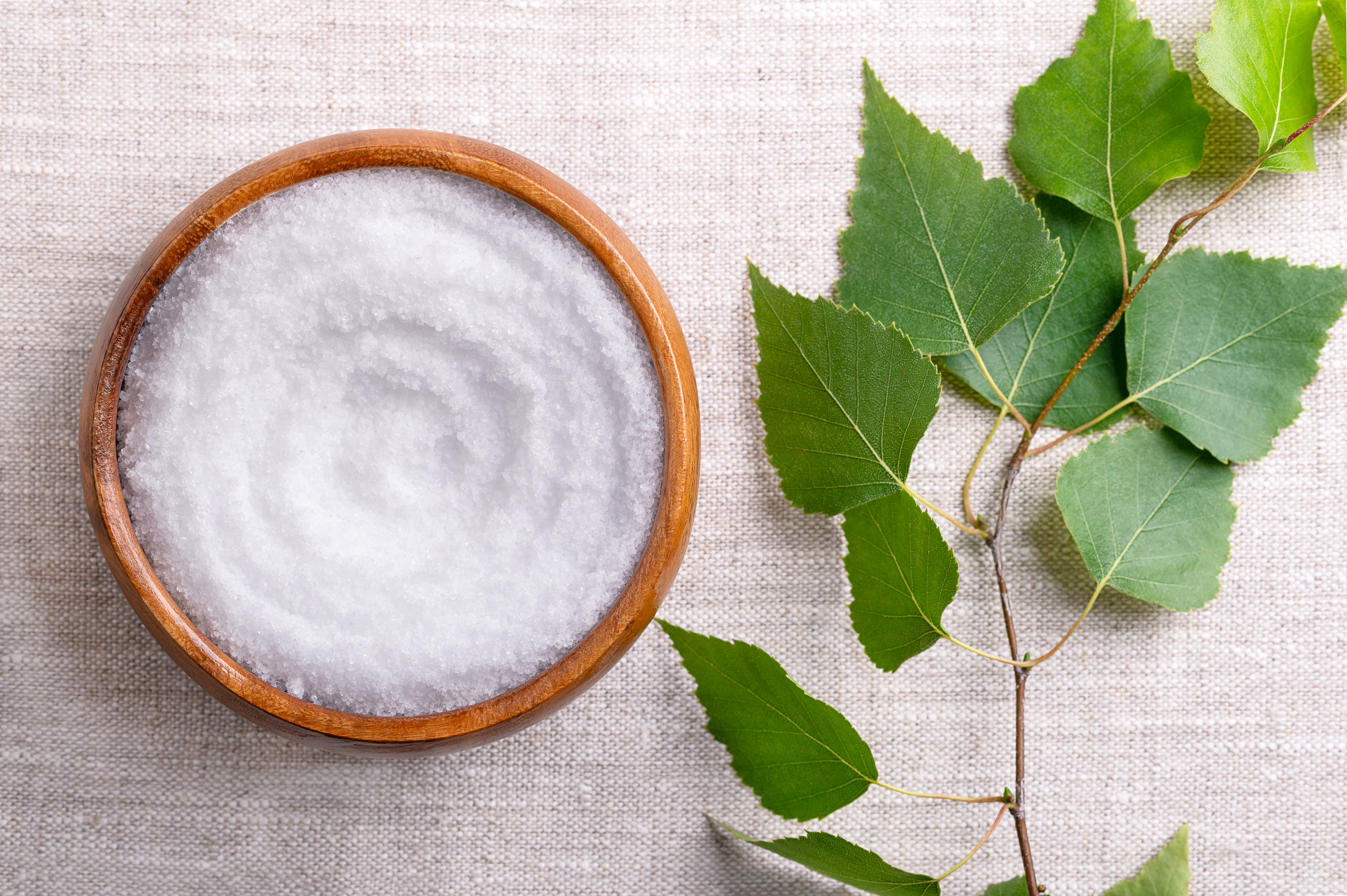

Xylitol is often thought to be a natural sugar substitute. If you look at the production, you quickly realise that this is not the case. The production process is quite complex. First, xylose, also called wood sugar, is extracted from the raw material. High temperatures, caustic soda and acid are needed to extract wood sugar. Then the xylose is converted into xylitol by pressure.
Since xylitol has a consistency similar to household sugar, it can also be used as such. Food and drinks can be sweetened with xylitol. The sugar substitute is also suitable for making jam and baking cakes.
Xylitol is not suitable for yeast dough because the dough does not rise as well. Its use in cold drinks can also lead to the formation of lumps. In this case, it helps to dissolve the birch sugar in a little water beforehand.


Make sure that the place of delivery and the language correspond to your region. Otherwise, change your selection:
 Europe
 Switzerland
Europe
Switzerland
Europe Weitere Länder
 English
English
English Deutsch
 Français
 Italiano