Popular Products

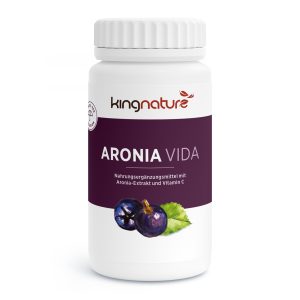
Aronia Vida
€ 79.72
Lithium supplements are increasingly being considered as a potential support for emotional balance and mental clarity, as they are a promising option for those looking for natural ways to improve their wellbeing.
Lithium is an essential trace element found not only in the earth’s crust, but also in small amounts in the human body. It plays a crucial role in neurological health and can be obtained through dietary supplements, especially when natural intake through food is insufficient. In this article, we take a detailed look at the importance, benefits, applications and scientific background of lithium as a dietary supplement. Lithium is also used in various industrial applications, such as batteries.
Lithium was first discovered in the 1940s as an effective treatment for mania. Since then, the understanding of its mechanisms of action has expanded considerably. Today’s studies focus not only on its mood-stabilising properties, but also on its potential neuroprotective effects. There is evidence that lithium promotes neurogenesis (the formation of new nerve cells) and has antioxidant effects.
Lithium is found in traces in many tissues of the body. It is thought to support various functions in the body, although the exact mechanisms are not fully understood. Research in this area is still active.
Lithium is found in small amounts in some foods and mineral waters. However, the amount may vary depending on the region and dietary habits. Targeted supplementation may be considered if specific needs exist.
Lithium is one of the lightest metals and is predominantly found in nature in mineral form. In the human body, lithium has a particular effect on the central nervous system. It is known to have neuroprotective properties and has been used for decades in the medical treatment of mental disorders, especially bipolar disorder. Its use in low-dose supplements aims to improve overall mood and promote cognitive well-being.
Lithium is available in various forms, including lithium orotate and lithium carbonate. These differ in their composition and availability. It is important to choose the right form for individual needs.
The correct dosage depends on various factors, including the form of the preparation and the specific need. An exact dosage recommendation should be given by specialists.
Always take as directed by a healthcare professional to achieve optimal results! Generally speaking, the recommended dosage of lithium as a dietary supplement is extremely low, typically in the range of 5 to 10 mg per day. This low dosage is sufficient to realise the potential benefits without increasing the risk of toxicity. It is important that lithium is always taken under medical supervision, especially for those with pre-existing medical conditions or taking other medications. It is advisable to take lithium supplements with a meal to avoid possible stomach upset.
As with any dietary supplement, it is important to discuss the use of lithium with a healthcare professional, especially if other medications are already being taken or if there are specific health concerns.
People with certain health conditions or pregnant and breastfeeding women should take special care before taking lithium. A doctor should be consulted to assess possible risks.
Even at low doses, side effects can occur when taking lithium. The most common include:
Find out more about other active ingredients and terms in our kingnature lexicon.


Make sure that the place of delivery and the language correspond to your region. Otherwise, change your selection:
 Europe
 Switzerland
Europe
Switzerland
Europe Weitere Länder
 English
English
English Deutsch
 Français
 Italiano