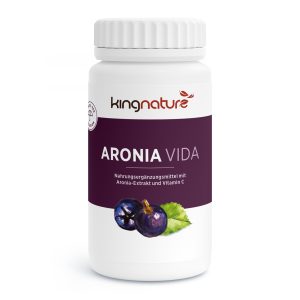
Popular Products

Aronia Vida
€ 79.72
Alkaloids are a heterogeneous group of natural organic compounds that occur in many plants, animals, fungi and microorganisms.

Nitrogen-containing compounds: Alkaloids contain at least one nitrogen atom, which is usually incorporated into a heterocyclic ring system. This structure gives them basic properties, which means that they can absorb protons and therefore carry a positive charge.
Occurrence: Over 10,000 different alkaloids are known to occur, mainly in higher plants, particularly in families such as the poppy family (e.g. morphine), nightshade family (e.g. nicotine) and papilionaceous plants (e.g. quinoa).
Alkaloids can be classified according to their chemical structure or their effects:
By chemical structure:
After effect:
Alkaloids often have strong effects on the human and animal organism. They can cause both therapeutic and toxic effects. Examples are
Plant defense: Alkaloids often serve as a defense against predators and diseases. Their bitterness can deter animals, while their toxic properties repel many insects.
Medicinal use: Alkaloids have a long history of medicinal use. Many alkaloids are still used in pharmacy today, both as medicines and in research to develop new therapeutic approaches.
The toxic effects of alkaloids can be serious:
The structure-activity relationship (SAR) plays an important role in pharmaceutical research. By understanding how small changes in the chemical structure can influence the effect of an alkaloid, work is being done on the development of new drugs. Innovative technologies such as computer-aided drug design help to identify new compounds that target specific receptors in the body.


Make sure that the place of delivery and the language correspond to your region. Otherwise, change your selection:
 Europe
 Switzerland
Europe
Switzerland
Europe Weitere Länder
 English
English
English Deutsch
 Français
 Italiano